Agentic Platform Engineering
SynapseGraph
Ask for a company, get a full research report. Eight agents, four analysts at once, every node streamed as it fires.
A research analyst, as a graph of agents.
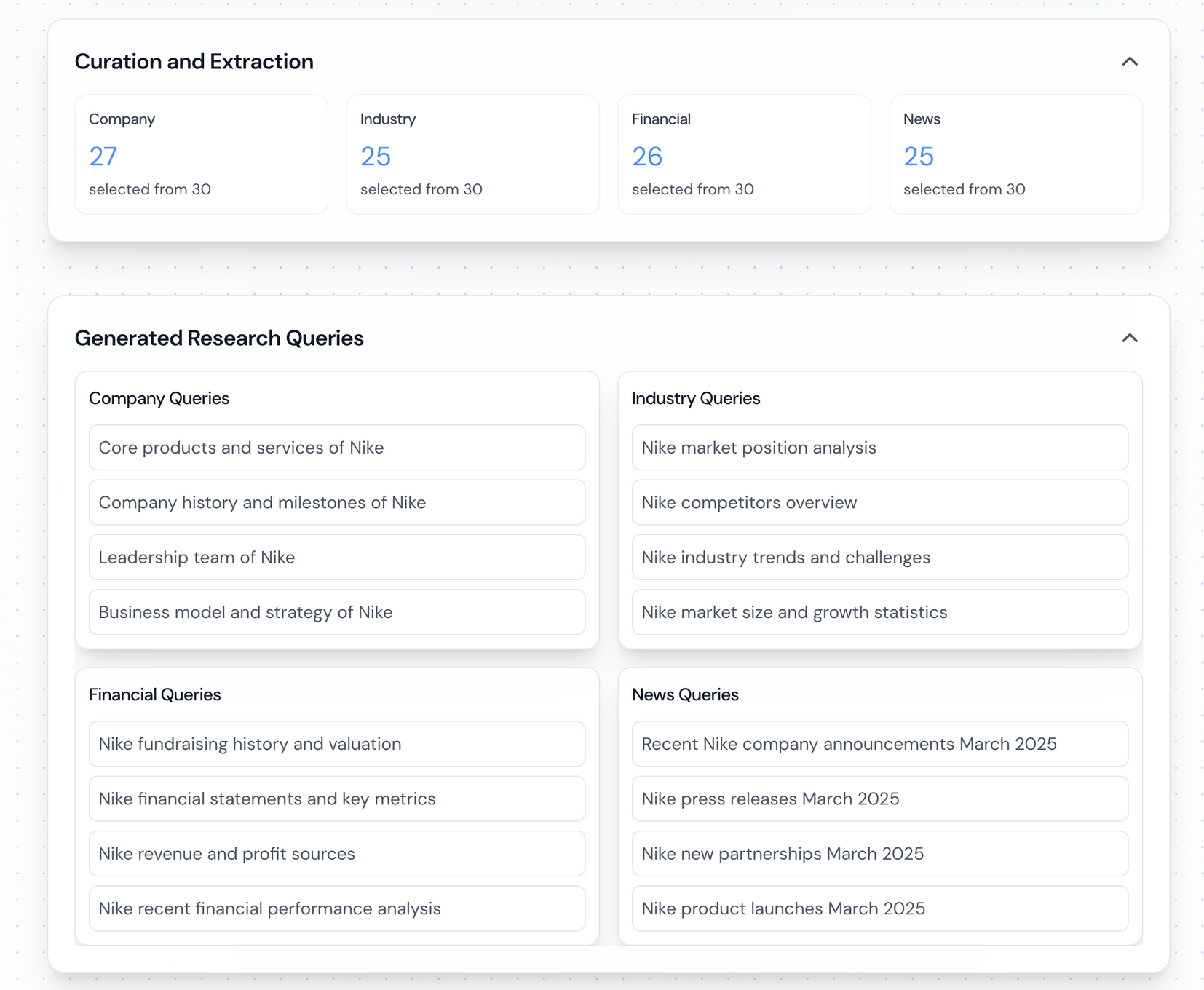
SynapseGraph generates a comprehensive company research report on demand. Instead of one model trying to do everything, it runs a pipeline of specialists (company, industry, financial, and news analysts) that gather sources in parallel, then hand off to a collector, curator, and editor that synthesize a final briefing.
One model, one shot, no provenance.
Ask a single LLM for a company report and you get a confident blob: no division of labour, no source filtering, and no way to watch it reason. Research is parallel and multi-source by nature. The architecture should be too.
A LangGraph DAG with live progress.
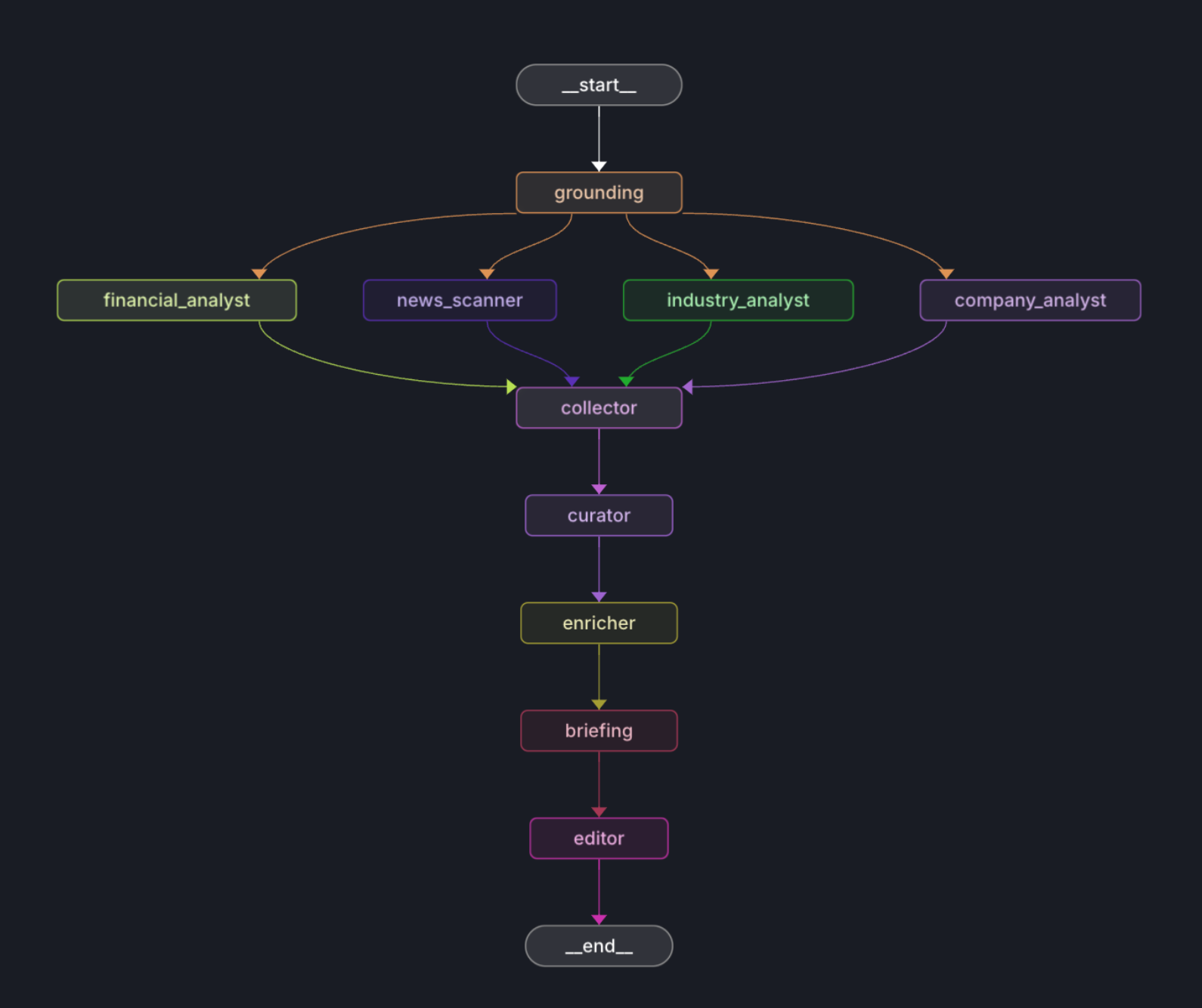
The system is a LangGraph DAG over a FastAPI backend. A grounding step fans out to four analyst agents; their findings converge on a collector, then a curator, an enricher, a briefing writer, and an editor. A React front end subscribes over WebSocket and renders progress as each node fires.
Two models, split by job: Gemini 2.0 Flash handles synthesis, GPT-4.1-mini handles formatting. Sources are kept or dropped by a relevance score before they ever reach the report.
What shaped it
Specialists over a generalist
- Four analyst agents, each with a single lens: company, industry, financial, news.
- A collector / curator / editor chain turns their raw findings into one coherent briefing.
Stream the work
- WebSocket progress so the user watches the report build node by node, not a spinner.
- Live updates and download when the editor finishes.
Filter before you synthesize
- Relevance scoring drops weak sources before synthesis, so the report stays grounded.
- Right model for the right job: Gemini 2.0 Flash to synthesize, GPT-4.1-mini to format.
The platform
Eight-node agent graph
Grounding, four analysts, collector, curator, enricher, briefing, editor.
Real-time streaming UI
A React front end that renders progress over WebSocket.
Relevance-scored RAG
Sources filtered by a minimum relevance threshold before synthesis.
Containerized
FastAPI + MongoDB, Dockerized, with cloud-deploy configs. Apache-2.0.
Where it landed
An end-to-end agentic research tool: type a company, watch a crew of agents assemble the report live, and download a synthesized briefing. Open-sourced under Apache-2.0.
Agents
8-node LangGraph DAG
Models
Gemini 2.0 Flash + GPT-4.1-mini
Code
Open source · Apache-2.0
Portable lessons
01Decompose by lens; let specialists do one thing well.
02Stream the process. Provenance and progress build trust.
03Filter sources before synthesis, not after.